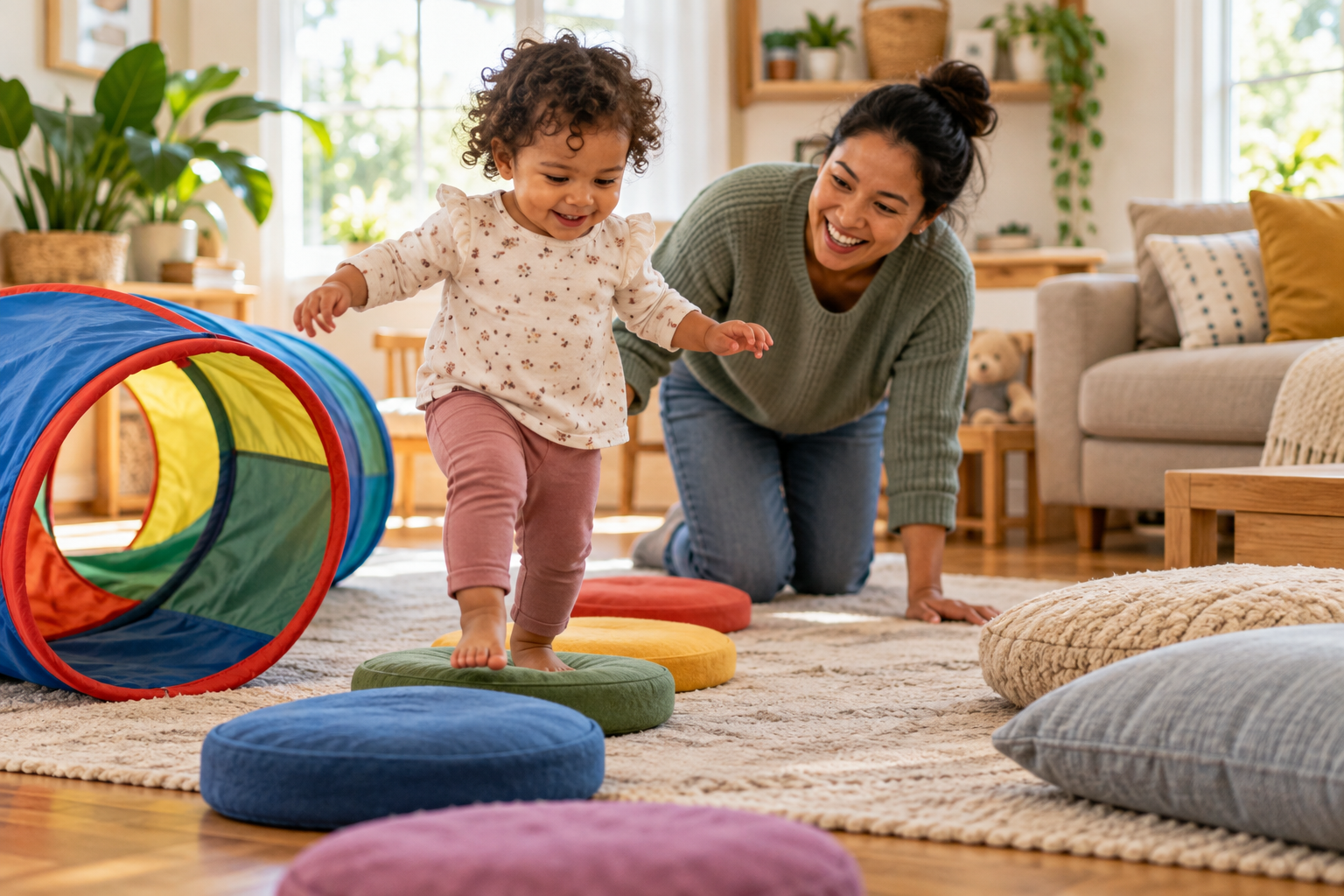
<p>Toddlers are built to move, but many parents hear “movement activity” and picture special equipment or a perfectly planned class. In real homes, the best movement play is often brief, repeatable, and easy to start again tomorrow. Parents do not need a perfect plan; they need a useful place to begin and permission to adjust it for the child in front of them.</p> <p>For children ages one to five, the adult’s role is to prepare a safe invitation and then pay attention. Demonstrate just enough to get started. If the child changes the plan in a safe way, that is often evidence of thinking rather than failure to follow directions. Short, repeated experiences usually teach more than a complicated project everyone is determined to finish.</p> <p>A practical place to begin is to practice animal walks across the room, moving like a bear, duck, crab, or very slow turtle. Use ordinary conversation while you play. Words connected to a real action are easier for young children to understand and revisit.</p> <p>Another useful approach is to play freeze-and-go with music, leaving plenty of time for your child to hear the change. There is no need to correct every unexpected choice. Ask what the child is doing and let their explanation guide the next step.</p> <p>Families can also roll, kick, and gently chase a soft ball in an uncluttered space. Repetition is productive at this age. A child who asks for the same experience again is often practicing something important.</p> <p>On a different day, try to make a line from tape and try stepping beside it, over it, and backward along it. Keep the first attempt brief and notice what captures attention; that observation will tell you what to repeat or change next time.</p> <p>Finally, remember to finish active play with stretching, deep breaths, and a familiar quiet song. If the idea feels difficult, simplify the materials or do one part together. Support can fade as the routine becomes familiar.</p> <p>Watch for the difference between a child losing interest and a child working quietly. Adults sometimes add instructions just when a young learner is concentrating. Give the moment a little space. When attention truly moves on, end without apology and leave the possibility of returning. Curiosity is easier to protect when activities are invitations rather than obligations.</p> <p>The value of movement activities for toddlers is not found in doing every suggestion at once. Choose the idea that fits today’s time, space, energy, and developmental stage. Watch the child’s response, make one small adjustment, and treat that response as useful information. This flexible rhythm is how a promising idea becomes something a family can actually use.</p> <p>OWL’s Move With Larissa series is built around this kind of joyful participation. The goal is not athletic performance. It is helping young children connect words, rhythm, balance, coordination, and the pleasure of moving with someone they trust.</p> <p>Try one idea at a time and let it become part of family life before adding another. Children do not need a constant stream of new activities. They need safe materials, responsive adults, and enough unhurried repetition to discover what their minds and bodies can do.</p>
Movement Activities for Toddlers
Toddlers are built to move, but many parents hear "movement activity" and picture special equipment or a perfectly planned class. In real homes, the best movement play is often brief, repeatable, and easy to start again…
By Rick Lofton · October 2, 2026
Keep reading
More in Child Development
 Child Development
Activity Bundles for Busy Families
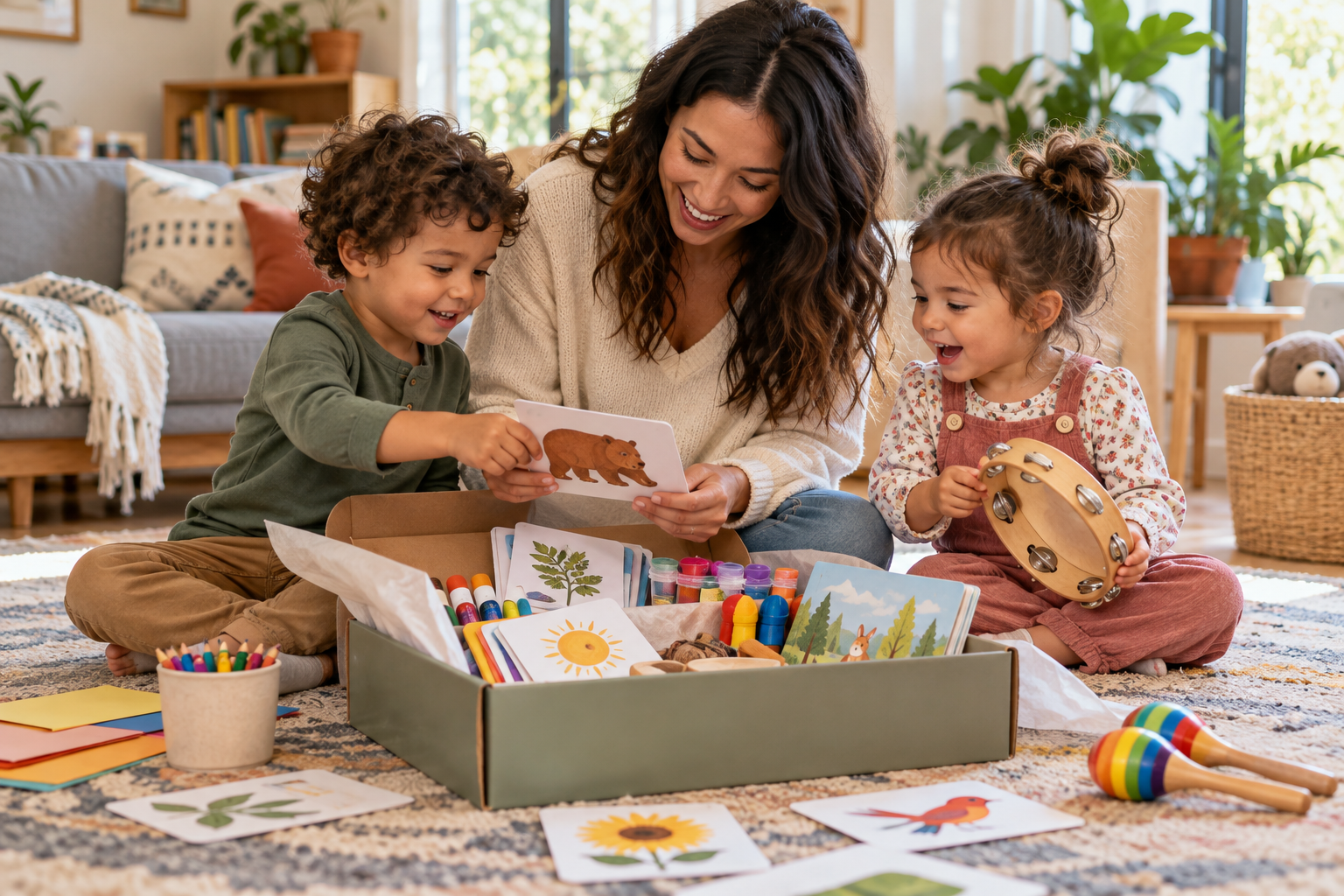
Busy families do not need more guilt disguised as enrichment. A useful activity bundle removes decisions, keeps materials connected, and makes it possible to begin in a few minutes—even if the kitchen is noisy and the…
Read more →Oct 24, 2026
3 min read
 Child Development
Bedtime Music and Quiet Time
Bedtime music works best as a cue, not a concert. The same gentle song in the same part of the routine can tell a child's body that play is ending and connection is still available as the day grows quiet. Parents do not…
Read more →Oct 16, 2026
3 min read
 Child Development
Calm-Down Songs for Big Feelings
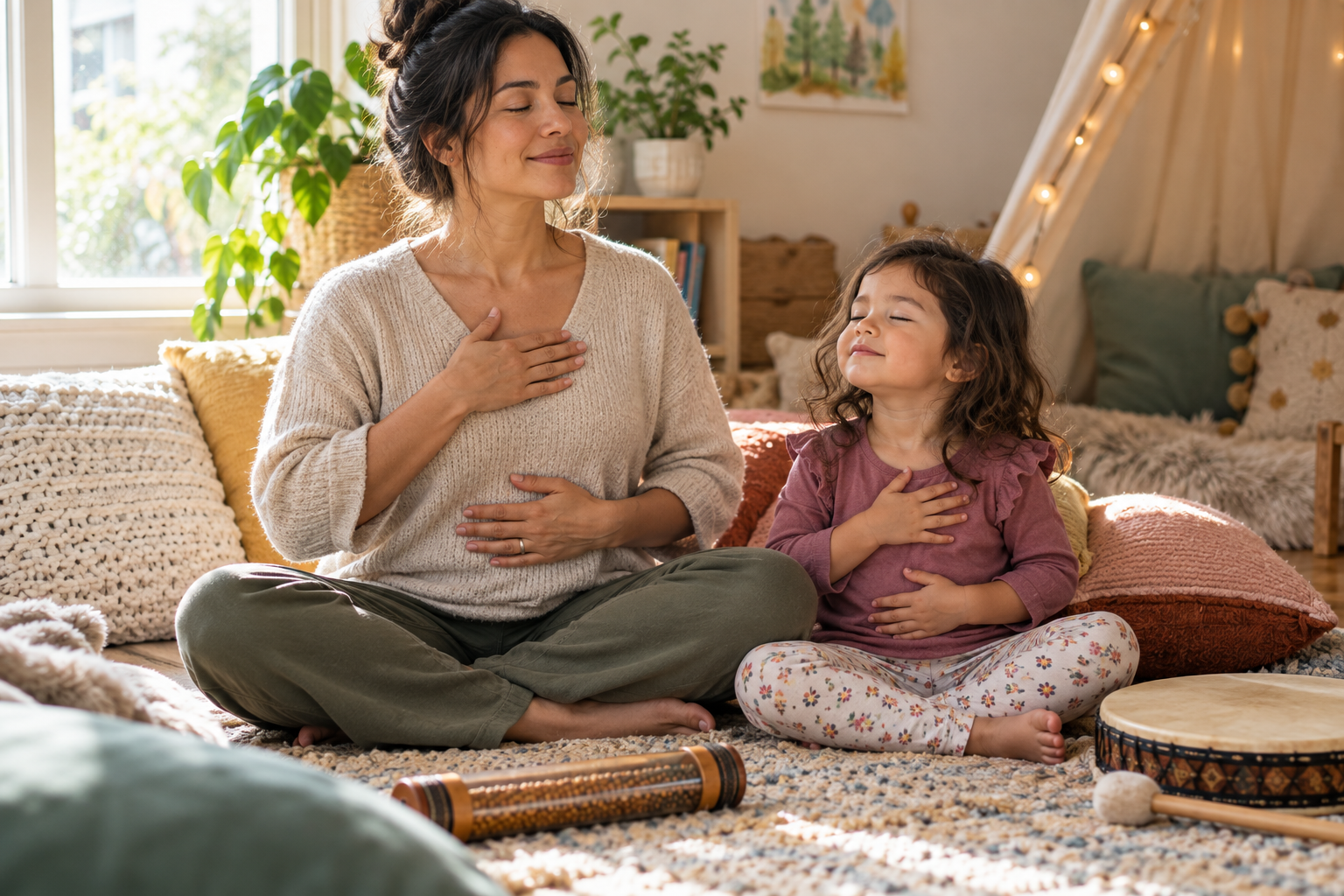
A calm-down song is not a switch that turns a tantrum off. Its real power comes from familiarity: the same melody, voice, and gentle actions can help a child recognize that an adult is near and regulation is possible.…
Read more →Oct 13, 2026
3 min read
The OWL Weekly
A small letter from Larissa, every Sunday.
One short video, one free printable, one cultural note, one small parenting win. Five minutes to read — written like a note to a friend.
Double opt-in via Beehiiv. Unsubscribe anytime.
