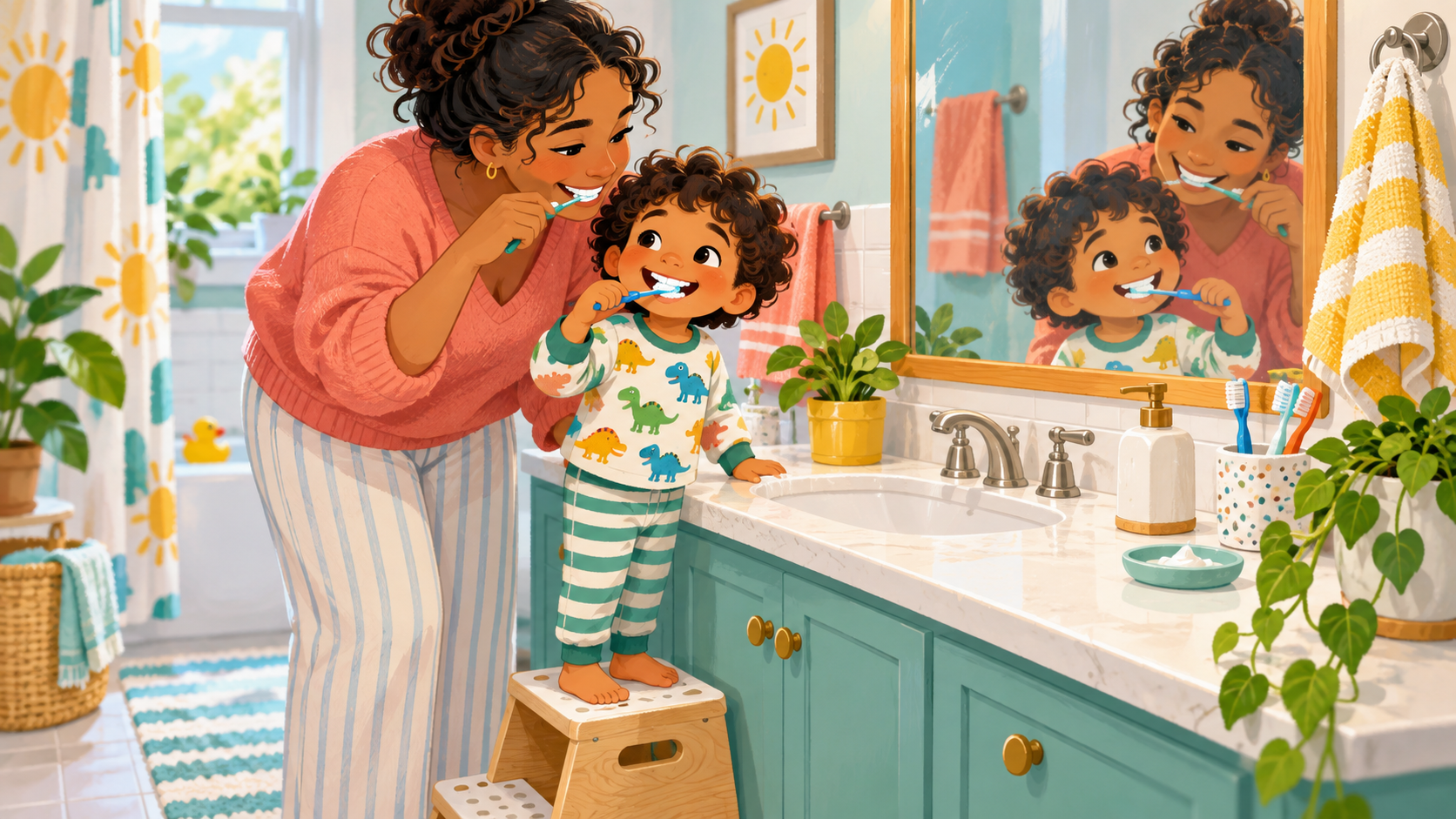
<p>A preschooler may insist, “I can do it,” but the hand skills needed for thorough brushing are still developing. Let the child take a turn, then explain that the adult finishes the places that are hard to reach. This preserves independence without handing over the entire job.</p> <p>Brush twice a day with a soft, age-appropriate toothbrush and fluoride toothpaste. The American Academy of Pediatric Dentistry advises a tiny smear for children under 3 and a pea-sized amount from ages 3 to 6.</p> <p>Good positioning reduces chasing and gagging. A child can stand on a sturdy stool with the adult behind them at the mirror, sit on the adult’s lap with the head supported, or lie back with the head in the adult’s lap. Use the position that lets you see the teeth and keeps the child safe.</p> <p>Keep toothpaste out of reach when the routine is finished. Young children should not swallow large amounts.</p> <p>Use the same short sequence: choose brush, add toothpaste, child’s turn, adult’s turn, spit, rinse the brush, done. A picture routine can help. Give two choices that do not change the outcome, such as the red or blue brush, or brushing before or after pajamas.</p> <p>Avoid asking whether the child wants to brush when no is not an available answer.</p> <p>Sing a familiar song, count sections of the mouth, let a stuffed animal watch, or pretend to find tiny food explorers. Keep the game simple enough that brushing still happens. A two-minute timer or song can guide the length if your dentist recommends it.</p> <p>Do not frighten the child with pictures of cavities or threats of painful dental visits. Fear may win one night and make the next month harder.</p> <p>Name the feeling and hold the boundary: “You do not want to brush. Teeth still need cleaning. Do you want to stand or sit?” If the child closes their mouth, pause, help the body settle, and try again. Keep your voice low and movements gentle.</p> <p>If every attempt causes panic, pain, or gagging, ask the dentist for positioning help and rule out sores, tooth pain, sensory needs, or another problem.</p> <p>Water is the best bedtime drink after brushing. Avoid putting a child to bed with juice, sweet drinks, or milk sitting on the teeth. Keep sweet snacks and drinks to planned eating times rather than frequent sipping.</p> <p>Schedule dental visits as recommended and ask about fluoride varnish, flossing between teeth that touch, and the fluoride level in your water.</p> <p>For three days, focus on position and routine. Let the child practice on a doll and choose the brush. For the next four days, use the same song and let the child start before the adult finishes. Praise one concrete action: opening wide, holding still, or spitting.</p> <p>During week two, reduce the entertainment while keeping the order. The goal is a routine that works even when nobody feels playful. If one parent has become part of the struggle, let another trusted adult try the same plan for several nights.</p> <p>Track comfort, not perfection. A calmer 60-second brush that happens twice a day may be a better bridge than a two-minute wrestling match. Ask the dentist how to improve technique once cooperation grows.</p> <p>Toothbrushing should feel like washing hands or buckling the car seat: a normal health task with room for feelings but no daily vote. Calm repetition, appropriate help, and small choices usually work better than bigger rewards or louder warnings.</p> <p>Choose a dental office that regularly treats young children and tell the staff about fear, sensory sensitivities, communication differences, or a previous difficult visit. Before the appointment, read a simple book or practice opening wide while the parent counts teeth. Keep the description honest and brief. Avoid promising that nothing will feel strange or that there will be no discomfort.</p> <p>Bring the toothbrush and toothpaste your child uses if the dentist wants to see the routine. Ask the hygienist to demonstrate how the adult should position the child and angle the brush along the gumline. Questions worth asking include whether the child’s teeth touch closely enough to need floss, whether fluoride varnish is recommended, and when the next visit should occur.</p> <p>After the appointment, describe what the child managed rather than declaring them brave only if they did not cry. “You sat in the chair and let the dentist count four teeth” recognizes cooperation during a hard experience. If the visit could not be completed, make a gradual follow-up plan instead of treating it as failure.</p> <p>Call the dentist sooner for pain, swelling, a broken tooth, darkening after an injury, bleeding that concerns you, or spots that may be decay. A child who suddenly fights brushing may be protecting a sore area. Behavior can be the first clue when a young child cannot explain tooth pain clearly.</p> <p>The routine does not have to look cheerful every night to be successful. Gentle, thorough brushing by an adult is the goal, and cooperation usually grows when the steps remain brief and predictable.</p>
Brushing Young Teeth Without a Battle
A preschooler may insist, "I can do it," but the hand skills needed for thorough brushing are still developing. Let the child take a turn, then explain that the adult finishes the places that are hard to reach. This…
By Rick Lofton · October 5, 2026
More stories
More health-wellness
 health-wellness
Seasonal Allergies or a Cold
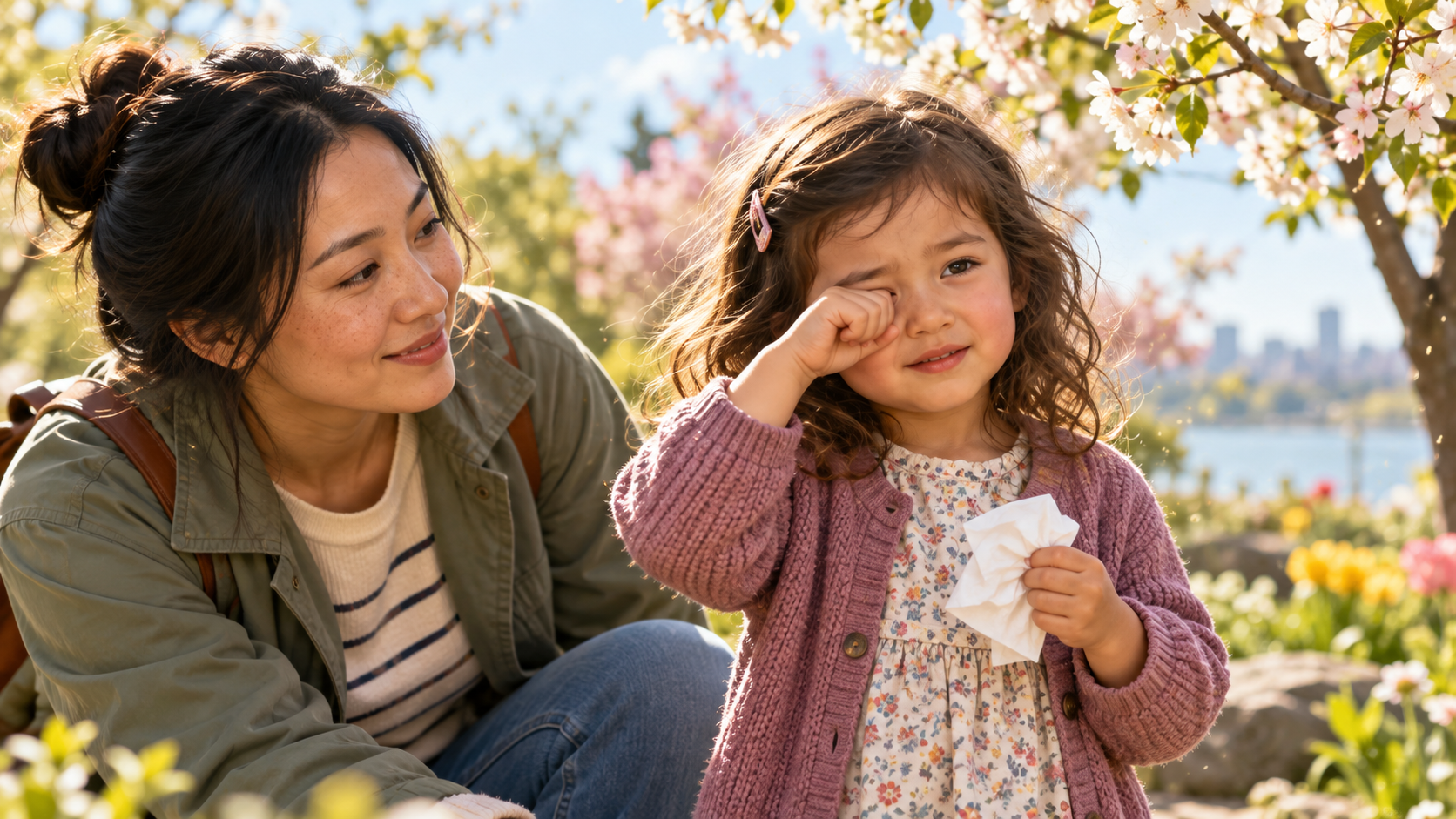
A runny nose in a preschooler can seem endless. When sneezing and congestion appear, parents often wonder whether the cause is a virus or seasonal allergies. The symptoms overlap, and a child can even have both at once.…
Read more →Oct 27, 2026
5 min read
 health-wellness
Ear Infections in Children Ages 2 to 5
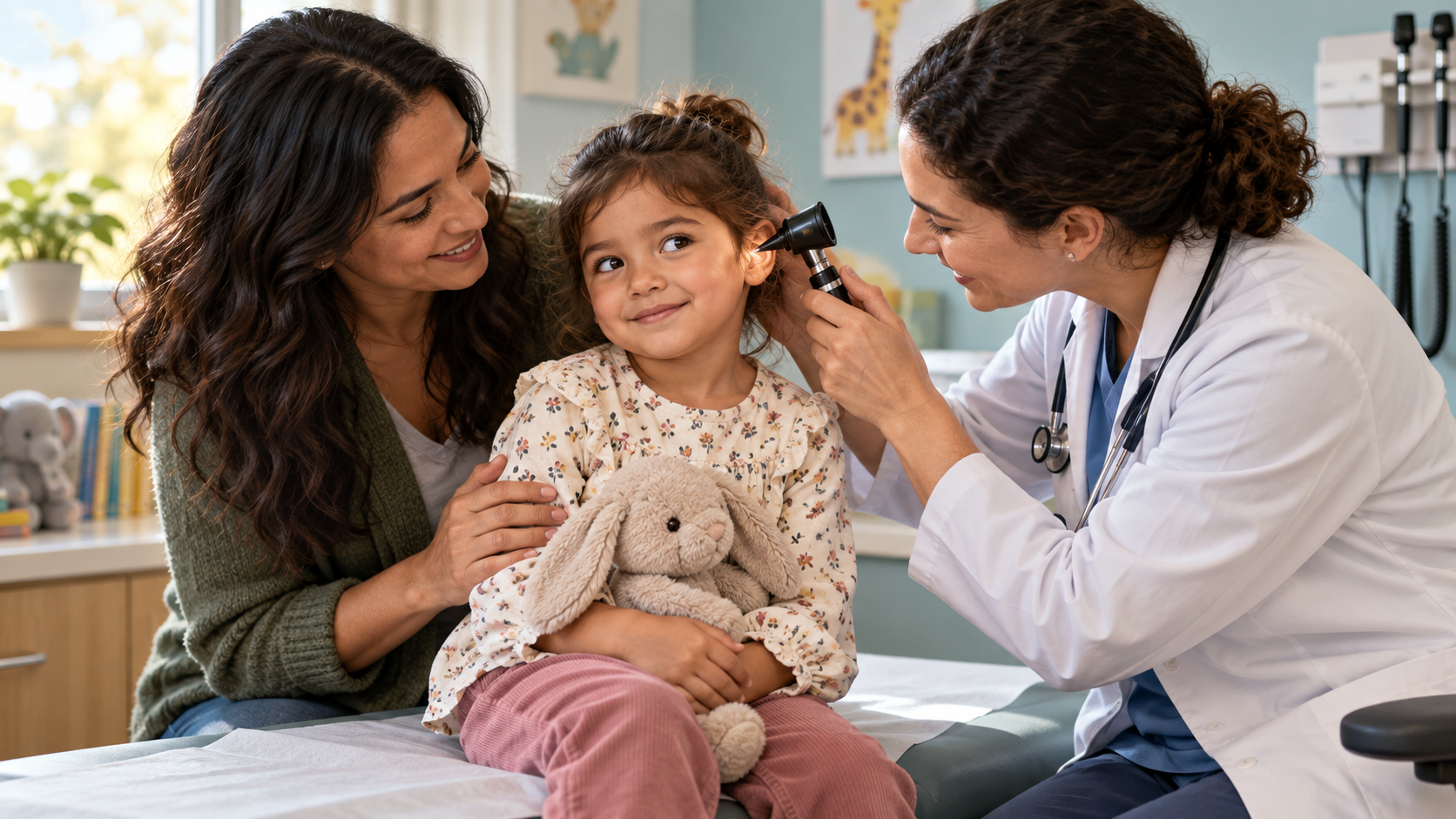
Ear pain can turn bedtime into a long night. Young children may say an ear hurts, but they may also cry, sleep poorly, seem unusually irritable, hear less clearly, or develop symptoms after a cold. Pulling at an ear by…
Read more →Oct 26, 2026
5 min read
 health-wellness
Coughs, Colds, and Safe Relief for Young Children
A child can sound miserable with a stuffy nose and still have an uncomplicated cold. Young children may catch many respiratory infections, especially after entering group care. Most are caused by viruses and improve…
Read more →Oct 14, 2026
5 min read
The OWL Weekly
A small letter from Larissa, every Sunday.
One short video, one free printable, one cultural note, one small parenting win. Five minutes to read — written like a note to a friend.
Double opt-in via Beehiiv. Unsubscribe anytime.
