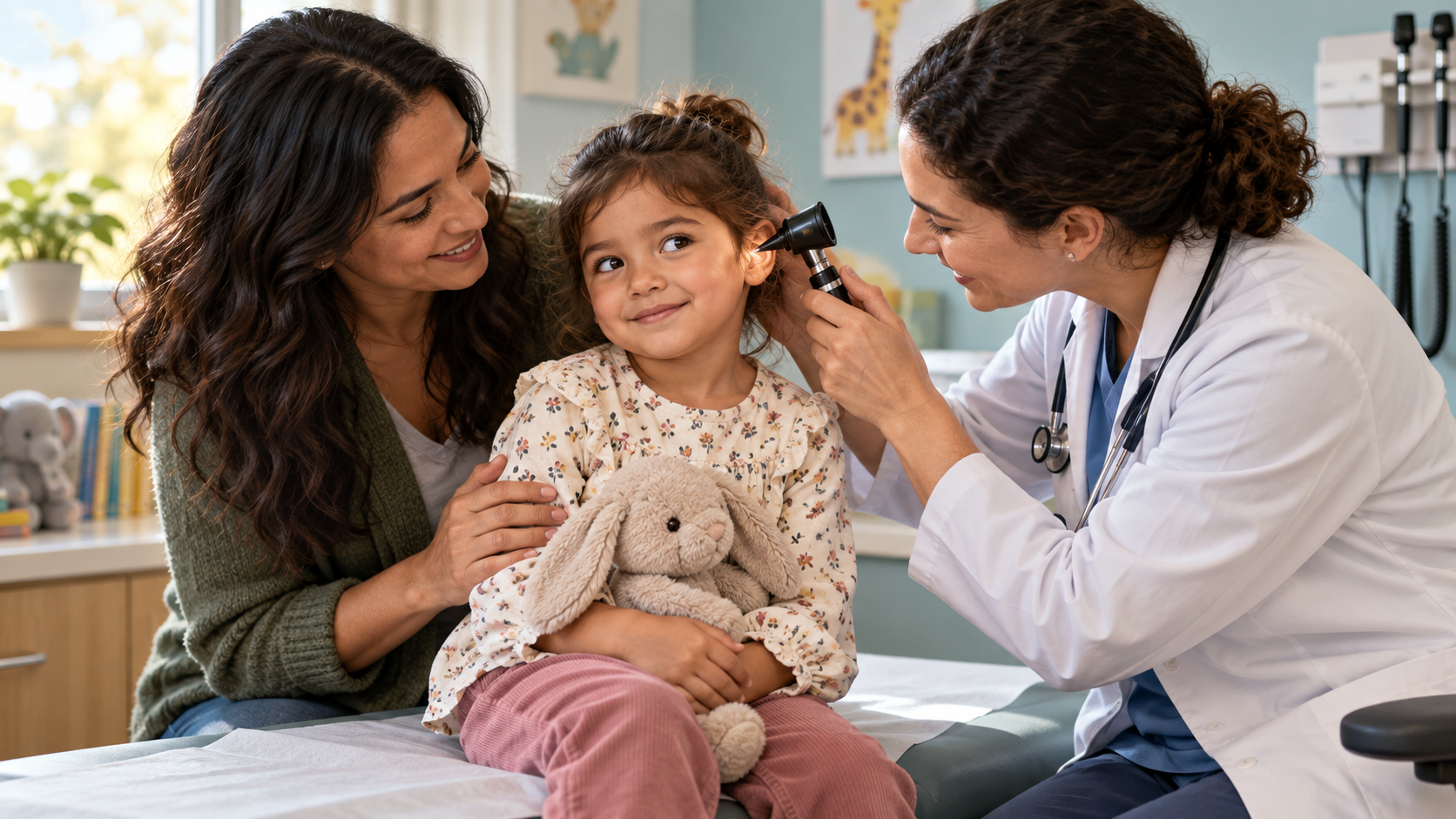
<p>Ear pain can turn bedtime into a long night. Young children may say an ear hurts, but they may also cry, sleep poorly, seem unusually irritable, hear less clearly, or develop symptoms after a cold. Pulling at an ear by itself does not prove there is an infection. A clinician needs to look at the eardrum to diagnose a middle ear infection accurately.</p> <p>Middle ear infections often follow a respiratory illness. Swelling can block the small passage that helps drain the middle ear, allowing fluid to collect behind the eardrum. Viruses cause some infections, and bacteria cause others. Parents cannot reliably tell which is present from mucus color, fever, or the intensity of the child’s mood.</p> <p>Call the pediatrician when a child has ear pain, drainage from the ear, new hearing difficulty, persistent fever, worsening illness, or symptoms that concern you. Seek urgent care for severe swelling or redness behind the ear, an ear that appears pushed outward, a stiff neck, extreme sleepiness, serious balance problems, breathing difficulty, or a child who looks dangerously ill.</p> <p>Pain relief matters even when the infection may improve without antibiotics. Ask the child’s clinician about an appropriate dose of acetaminophen or ibuprofen based on current weight and medical history. Use the measuring device supplied with the medicine. Do not give aspirin, and do not place drops, oil, peroxide, or other substances in the ear unless a clinician has confirmed they are safe for that child.</p> <p>A warm, not hot, washcloth held over the outside of the ear may be comforting. Offer fluids and a calm place to rest. Elevating a young child with loose pillows or unsafe sleep equipment is not an appropriate remedy. Follow ordinary safe sleep and bedding practices for the child’s age.</p> <p>Not every ear infection requires an antibiotic immediately. Depending on the child’s age, symptoms, exam, medical history, and whether one or both ears are affected, a clinician may recommend observation for 48 to 72 hours with good pain control. That plan is active monitoring, not ignoring the illness. Families need clear instructions about what improvement should look like and when to call back.</p> <p>When antibiotics are prescribed, give them exactly as directed. Do not use leftovers or another person’s medicine. Ask what to do if the child vomits a dose or misses one. Contact the clinician if symptoms worsen, an allergic reaction is suspected, or the child is not improving within the expected time.</p> <p>Fluid can remain behind the eardrum after the acute infection resolves. During that time, hearing may seem muffled. Most fluid clears, but persistent fluid or repeated infections can affect listening and speech access. Tell the pediatrician if the child turns up sound, frequently asks for repetition, speaks more loudly, or seems less responsive after illness.</p> <p>Keep follow-up appointments when they are recommended. Children with frequent infections, ongoing fluid, hearing loss, speech concerns, or certain developmental or medical conditions may need a hearing test or evaluation by an ear, nose, and throat specialist. Ear tubes help some children, but the decision depends on the pattern and the child’s individual needs.</p> <p>Reduce risk where possible. Keep children away from tobacco smoke and vaping aerosol, stay current with recommended vaccines, and use good hand hygiene to reduce respiratory infections. Breastfeeding in infancy may offer some protection, but a child can still have ear infections despite excellent care. Parents should not blame themselves for common anatomy and exposure.</p> <p>Avoid cotton swabs inside the ear canal. They can push wax deeper or injure the canal or eardrum. Clean only the outside with a washcloth. If wax blocks an exam or seems to affect hearing, ask the clinician how it should be managed rather than attempting to remove it with tools at home.</p> <p>Ear pain also has causes other than a middle ear infection, including swimmer’s ear, wax, throat infections, dental problems, injury, or a foreign object. Sudden pain after inserting something into the ear, bleeding, or suspected battery exposure requires prompt medical attention. Do not probe the ear to find the object.</p> <p>If the child has ear tubes, ask the specialist for specific instructions about drainage, swimming, and drops. Fluid draining through a tube may be a sign of infection even when the child has less pain. Do not assume every child with tubes needs earplugs or the same water precautions; recommendations depend on the tube, the activity, and the clinician’s plan.</p> <p>Daycare return depends on the whole child and the program’s policy, not simply the diagnosis. An ear infection itself is not usually contagious, but the cold that came before it may be. The child should be able to participate, drink, and receive any needed medicine safely. Fever, vomiting, breathing problems, or significant behavior change may require staying home and medical advice.</p> <p>Most children recover well, but the useful plan is more than waiting for the fever to disappear. Confirm the diagnosis, control pain safely, monitor hearing and behavior, and know the return precautions. Those steps help parents respond to the child in front of them instead of trying to diagnose an eardrum from the living room.</p>
Ear Infections in Children Ages 2 to 5
Ear pain can turn bedtime into a long night. Young children may say an ear hurts, but they may also cry, sleep poorly, seem unusually irritable, hear less clearly, or develop symptoms after a cold. Pulling at an ear by…
By Rick Lofton · October 26, 2026
More stories
More health-wellness
 health-wellness
Coughs, Colds, and Safe Relief for Young Children
A child can sound miserable with a stuffy nose and still have an uncomplicated cold. Young children may catch many respiratory infections, especially after entering group care. Most are caused by viruses and improve…
Read more →Oct 14, 2026
5 min read
 health-wellness
A Parent's Guide to Fever in Children Ages 2 to 5
A warm forehead can turn an ordinary evening into a stream of questions. How high is the temperature? Is the child drinking? Should medicine be given? Does the family need urgent care? For children ages 2 to 5, the…
Read more →Oct 13, 2026
5 min read
 health-wellness
Brushing Young Teeth Without a Battle
A preschooler may insist, "I can do it," but the hand skills needed for thorough brushing are still developing. Let the child take a turn, then explain that the adult finishes the places that are hard to reach. This…
Read more →Oct 5, 2026
5 min read
The OWL Weekly
A small letter from Larissa, every Sunday.
One short video, one free printable, one cultural note, one small parenting win. Five minutes to read — written like a note to a friend.
Double opt-in via Beehiiv. Unsubscribe anytime.
